What Is Data Engineering, and Why Does Every Business Need It?
Every business runs on decisions. What to stock. Whom to hire. Where to invest. When to expand. For decades, those decisions were driven by gut feel, experience, and spreadsheets. Today, the businesses that win are the ones that turn their data into a system—reliable, timely, and ready for analysis. That's where data engineering comes in.
This post is for founders, operators, and anyone who's heard "data is the new oil" and wants to understand what that really means—and why engineering that data matters as much as analyzing it.
What Is Data Engineering?
Data engineering is the discipline of building and maintaining the systems that collect, store, move, clean, and shape data so it can be used reliably for analytics, reporting, and AI.
Think of it as the plumbing and electrical work behind the scenes. Without it, you might have raw data everywhere—in apps, databases, spreadsheets, APIs—but no single source of truth, no clear pipeline from "what happened" to "what we know," and no way to trust the numbers when it's time to decide.
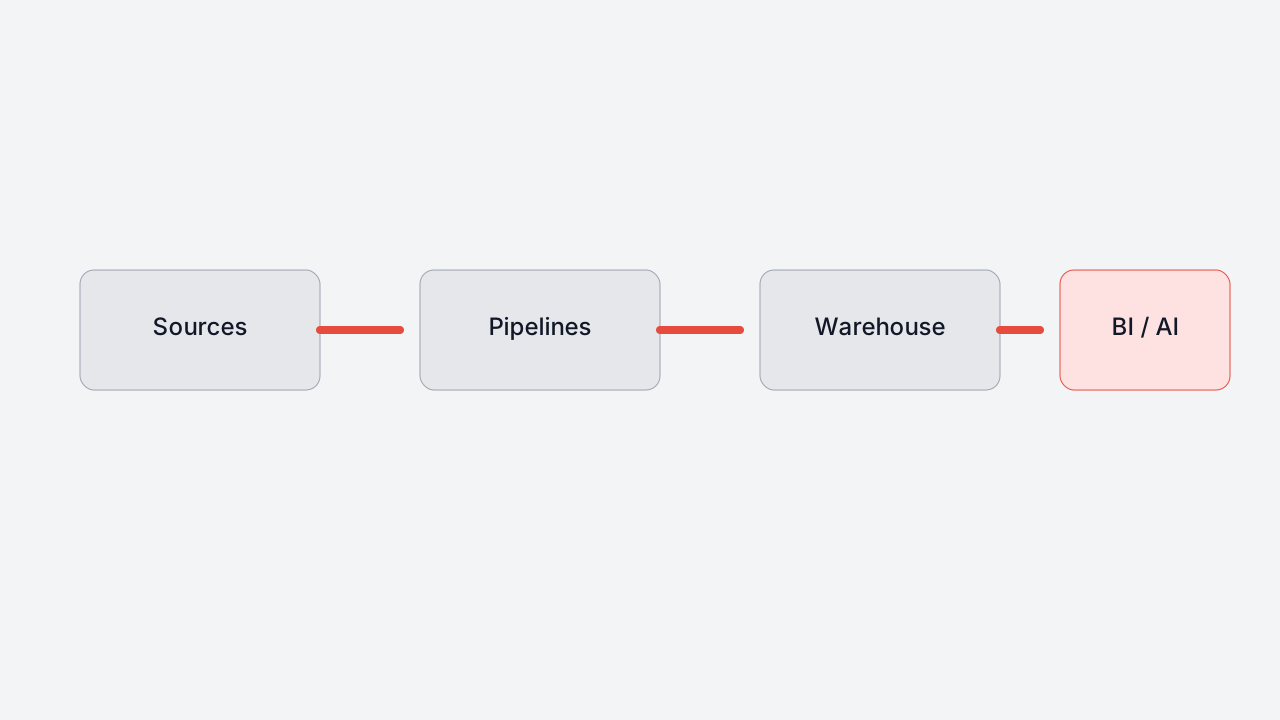
Data engineers design and build:
- Pipelines that move data from sources (sales, marketing, operations, etc.) into a central place.
- Storage and structure so data is consistent, queryable, and secure.
- Quality checks so bad or missing data doesn't silently break reports and models.
- Automation so data is updated on a schedule (hourly, daily) instead of manual exports.
They don't usually build the final dashboards or train the AI models—that's BI and data science. But BI, AI, and data science all depend on the work data engineering does first.
Why Does Any Business Need It?
Because good decisions need good data.
It doesn't matter whether you're a shop, a SaaS startup, or an enterprise. If you're making decisions—pricing, inventory, hiring, marketing spend, product roadmap—you're already sitting on data. The question is whether that data is:
- Available when you need it (not stuck in someone's laptop or a legacy system).
- Accurate (no duplicates, no wrong formats, no "fixed" spreadsheets).
- Consistent (same definitions of "customer," "revenue," "churn" across teams).
- Timely (yesterday's numbers, not last quarter's).
When data is messy, late, or scattered, decisions become guesses. When it's engineered well, the same business can see patterns, spot risks, and act with confidence. That's why data engineering isn't just for tech companies—it's for any business that wants to use data to make better decisions.
How Data Helps Businesses Make Better Decisions
Data, when it's trusted and accessible, turns into:
- Insight: Which products sell, which channels convert, which customers churn.
- Prediction: What demand will look like, where bottlenecks will appear, which leads are likely to close.
- Optimization: Where to cut cost, where to invest, how to tune operations.
None of that happens by magic. It happens when:
- Data is collected from the right places.
- Data is cleaned and standardized so "revenue" means the same thing everywhere.
- Data is delivered to people and tools (dashboards, models, apps) in a usable form.
That end-to-end flow—from source to decision—is what data engineering owns. When it's done well, the rest of the stack (BI, AI, data science) can do its job. When it's done poorly, even the best analysts and the smartest models are working with garbage in, and garbage out.
How Data Engineers Help the Business Overall
Data engineers sit between "raw business data" and "insights and actions." They:
- Connect systems so data from CRM, ads, billing, support, and operations can be combined.
- Model data so there's a clear definition of customers, transactions, and events—the same language for finance, product, and marketing.
- Ensure quality so missing values, duplicates, and format errors are caught before they reach reports or models.
- Automate refreshes so dashboards and datasets are up to date without manual exports.
The outcome: one version of the truth, available on a schedule, so the business can run on facts instead of folklore.
BI, Data Science, and AI—All Rest on Quality Data
Business Intelligence (BI)
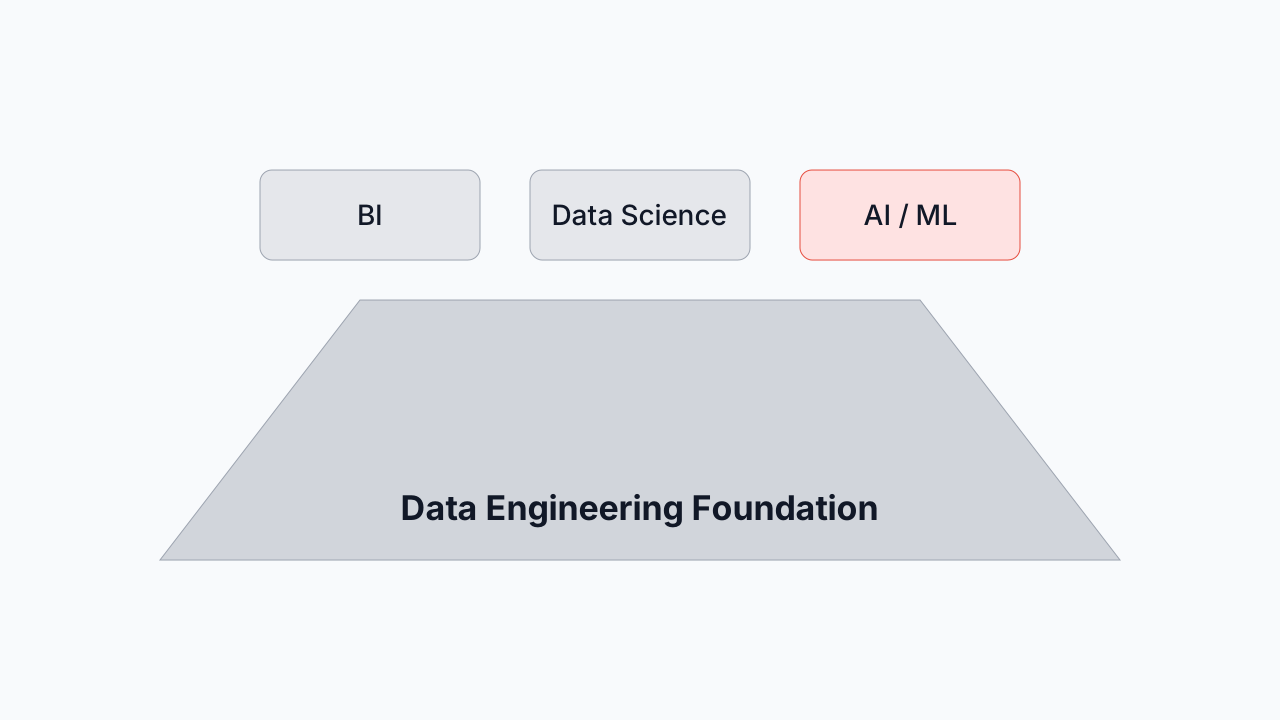
BI turns data into reports and dashboards: revenue by region, conversion by channel, pipeline by stage. Those reports are only as good as the data they're built on. If the pipeline is wrong, the dashboard is wrong. Data engineering provides the clean, consistent, timely data that BI tools consume.
Data Science (DS)
Data scientists build models—forecasting, segmentation, recommendation, risk. Those models need large, clean, well-structured datasets. Data engineers build the pipelines and tables that feed those datasets. No solid data foundation, no reliable models.
AI / ML
Modern AI and ML depend on huge amounts of labeled, consistent data. Training data must be ingested, cleaned, versioned, and served in a repeatable way. Again, that's data engineering. Poor data quality or unstable pipelines mean unstable models and untrustworthy AI.
So: BI, DS, and AI are closely coupled with good-quality data. The better the data foundation, the better the analytics, the models, and the AI. Data engineering is that foundation.
Why Data Is the New Oil

The saying "data is the new oil" isn't just a slogan. Like oil:
- Raw value: Data is generated constantly (transactions, clicks, sensors, support tickets). It has potential value, but it's not useful until it's refined.
- Refinement: Raw data has to be collected, cleaned, integrated, and structured—like refining crude into fuel. That refinement is data engineering.
- Distribution: Once refined, data has to reach the right places—dashboards, models, apps. Again, pipelines and systems.
- Competitive advantage: Businesses that refine and use their data well make better decisions, faster. Those that don't are left guessing.
So "data is the new oil" really means: data is the resource that, when engineered and used well, powers better decisions and sustainable advantage. And engineering is the discipline that turns that resource into something the business can actually use.
What This Means for You
You don't have to be a data engineer to care about this. If you're a founder, a manager, or an operator:
- Ask where your numbers come from. If the answer is "someone's spreadsheet" or "we're not sure," that's a signal.
- Treat data as infrastructure. Like servers and networks, it needs design, maintenance, and quality checks.
- Think pipeline, then insight. Before investing in fancy BI or AI, invest in getting the right data to the right place in the right shape.
Data engineering isn't the only piece of the puzzle—but it's the piece that makes BI, data science, and AI possible. Every business that wants to compete on insight needs to take it seriously.
Next in this series: we can cover "What does a simple data pipeline look like?" or "How do you start building a data foundation when you're small?"—pick what would help you most.